

How Much Weight Can a Standing Desk Actually Hold? A Practical Guide to Load Capacity
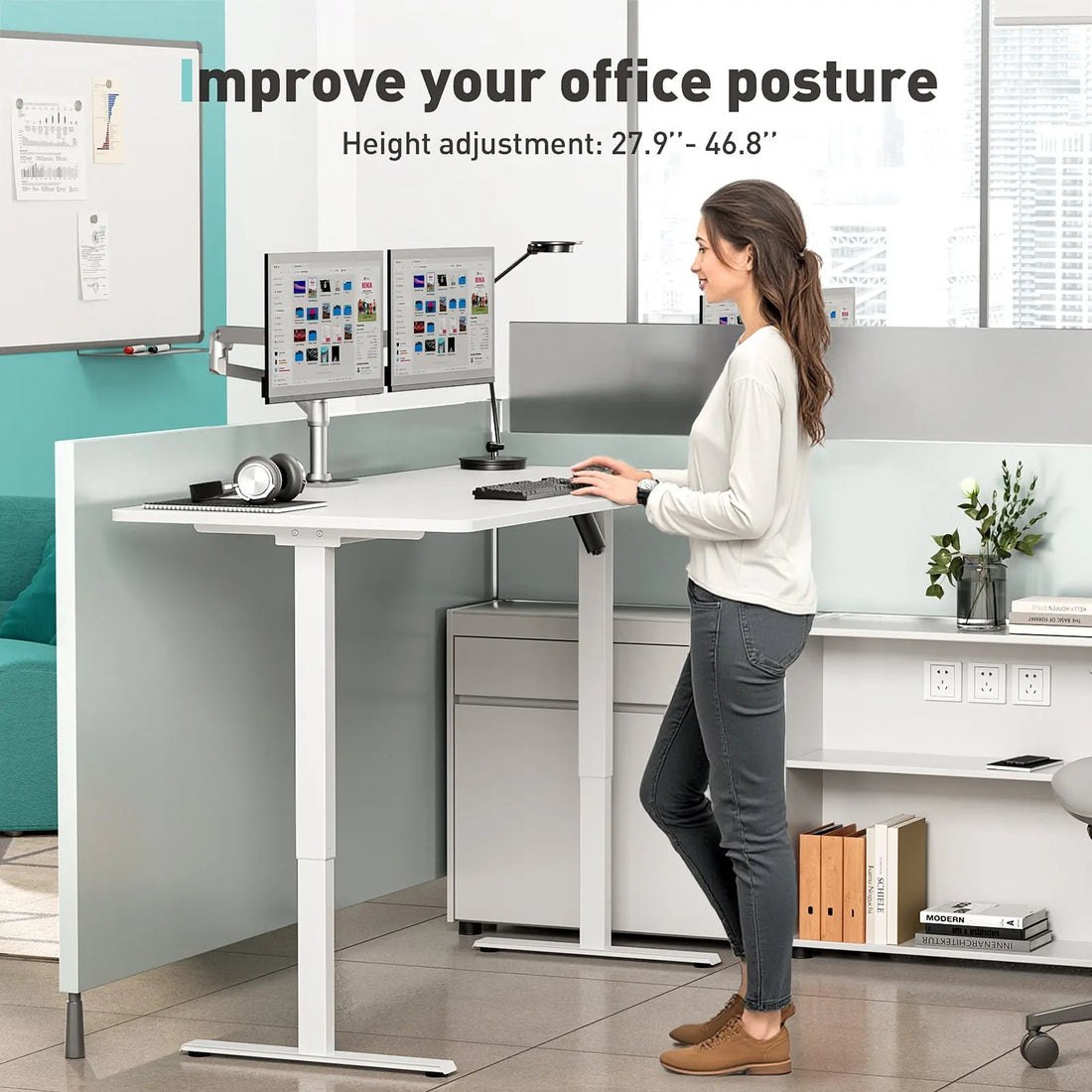
When shopping for an electric standing desk, it is easy to get focused on the features you can see: the color of the desktop, the style of the frame, the number of memory presets. But one of the most critical specifications is one you cannot see—the standing desk weight capacity, or load capacity.
This number is more than just a technical detail; it is a crucial indicator of the desk's power, stability and engineering quality. It determines what you can safely place on your desk today and how much room you have for future upgrades.
Understanding how much a desk can hold and, more importantly, how much weight you need it to hold, is essential for making a smart, long-term investment. This practical guide will help you decode load capacity and calculate your needs.
Static vs. Dynamic Load Capacity: A Critical Distinction
First, it is important to understand the two types of weight capacity.
-
Static Load Capacity: This is the total weight the desk frame can support without moving. It is always a much higher number and represents the desk's structural strength when stationary.
-
Dynamic Load Capacity (or Lift Capacity): This is the crucial number. It is the maximum weight the desk's motors can safely and reliably lift up and down. This is the number manufacturers advertise and the one you need to pay attention to.
When a desk lists a weight capacity of, for example, 250 pounds, it is referring to its dynamic lift capacity.

Why Does Weight Capacity Matter So Much?
Choosing a desk with an adequate load capacity is vital for several reasons:
-
Performance: A desk loaded near its maximum capacity will have slower lift speeds and its motors will be under constant strain. A desk with plenty of capacity to spare will operate smoothly, quickly and quietly.
-
Longevity: Consistently overloading a desk or running it at its maximum limit will wear out the motors and lifting mechanisms much faster, leading to premature failure. A higher capacity means less strain and a longer lifespan for your investment.
-
Stability: A frame built to handle more weight is inherently more robust. It is typically constructed from heavier-gauge steel, which provides a more stable and solid foundation with less wobble, especially at standing height.
-
Future-Proofing: Your setup today might be simple, but what about in two years? You might want to add a second or third monitor, a heavier PC tower, or a set of studio speakers. A desk with a high weight capacity gives you the freedom to upgrade your equipment without having to upgrade your desk.
Calculating Your Needs: A Simple Inventory
So, how much can a desk hold? The better question is, how much do you need it to hold? Let's do a quick inventory of a typical setup. The weights below are averages; you should check the specific weight of your own equipment if possible.
-
The Desktop Itself: This is the most overlooked item.
-
Laminate/MDF (48-60 inches): 40-60 lbs
-
Solid Wood/Butcher Block: 60-100+ lbs
-
Monitors:
-
24-inch Monitor: 8-12 lbs
-
27-inch Monitor: 10-15 lbs
-
32-inch+ or Ultrawide Monitor: 15-25+ lbs
-
Monitor Arms:
-
Single Monitor Arm: 5-10 lbs
-
Dual Monitor Arm: 10-20 lbs
-
Computers:
-
Laptop: 3-5 lbs
-
Standard PC Tower (Mid-Tower): 20-30 lbs
-
High-End Gaming PC: 30-50+ lbs
-
Peripherals and Accessories:
-
Speakers, keyboard, mouse, lamp, books, etc.: 10-20 lbs
Example Calculation (A Power User Setup):
-
Solid Wood Desktop (60-inch): 70 lbs
-
Two 27-inch Monitors: 30 lbs (15 lbs x 2)
-
Dual Monitor Arm: 15 lbs
-
Gaming PC Tower: 40 lbs
-
Accessories: 15 lbs
-
Total Estimated Weight: 170 lbs
As you can see, the weight adds up quickly. In this scenario, a desk with a low weight capacity of 180 pounds would be running at its absolute limit, leading to poor performance and a shortened lifespan. A heavy duty standing desk with a capacity of 250-300 pounds would handle this load with ease, ensuring smooth operation and plenty of room for future additions.

The Dual Motor Advantage
There is a direct correlation between a desk's motor system and its weight capacity.
-
Single Motor Desks: These desks have a much lower weight capacity, typically in the 150-180 pound range. They are only suitable for very light, minimal setups.
-
Dual Motor Desks: These are the standard for high-performance desks. With two motors sharing the load, they offer significantly higher weight capacities, usually starting at 220 pounds and going up to 350 pounds or more.
If you are planning anything more than a single laptop and monitor, a dual motor desk is the only reliable choice.
When you are choosing your standing desk, do not treat the weight capacity as a minor detail. Take a few minutes to inventory your equipment and calculate your needs. Choose a desk that not only meets your current requirements but comfortably exceeds them. This foresight will ensure you have a powerful, stable and durable workspace that can grow with you for years to come.
Invest in a desk built to handle your ambitions. Explore our range of high-capacity, dual-motor standing desks at vvenace.com.
Have questions about your setup's weight? Our experts can help you find the perfect heavy-duty solution. Contact us: sales@venace.com.

